
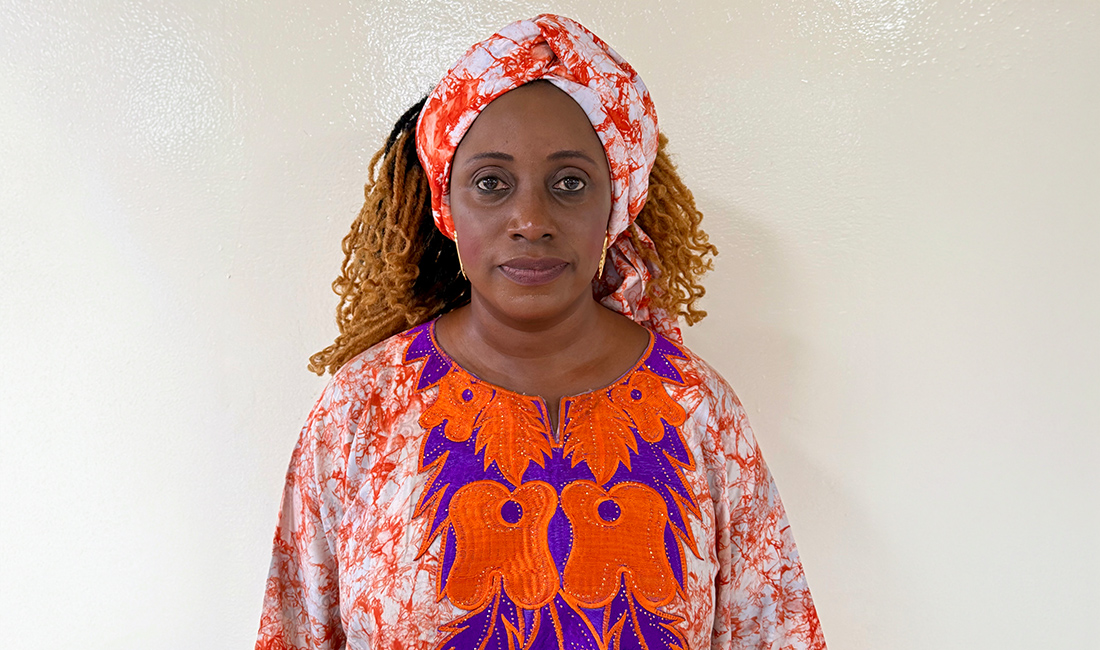
30 Sep Interview with Hon. Ngola Ramadan-Mamata, Minister of Arts, Culture and Tourism, CAR
The Central African Republic stands at a pivotal moment in its development, with substantial opportunities in tourism and improving infrastructure. How would you describe the current strengths of the tourism sector and which national assets offer the greatest potential to draw international visitors?
In terms of tourism, the CAR has several assets. First, its natural and wildlife potential is enormous. Specifically, the country has six national parks and ten wildlife or biosphere reserves, two of which are classified by UNESCO as World Heritage Sites. These include Manovo-Gounda St. Floris National Park and Dzanga-Sangha Reserve, which were designated in 2012. Many tourists, including Americans, already visit the Dzanga-Sangha Reserve, where they can admire the concentration of around a hundred elephants, a large number of buffaloes and bongos at the Dzanga Bai salt lick. In Dzanga-Sangha, tourists can also see gorillas and discover the cultural diversity of the local and indigenous populations. We encourage them to come here more often. Tourism activities are gradually resuming in Manovo Gounda Park, where conservation work is currently being carried out with the support of an international NGO. In addition to the above, a new protected area is currently being established in the east of the country. This is Chinko, which has significant wildlife potential that will enable the development of ecotourism and hunting tourism in the area.
Finally, new hotel infrastructure is being created in Bangui and in certain provincial towns. All of this is helping to increase the flow of tourists arriving in the CAR. In terms of arts and culture, the CAR is rich in customs and traditions (singing, dancing, culinary arts, etc.). The diversity that characterizes the Central African people truly reflects the richness of the songs, dances, customs and traditions of the country’s different regions.
It should be noted that one element of the CAR’s intangible cultural heritage has been included on the tentative list of the intangible cultural heritage of humanity since 2003. This is the polyphonic singing of the Aka pygmies. Increasingly, a cultural industry is emerging with the organization of a number of events such as “Bangui Fait son Cinéma,” “Ti i Festival,” “le Festival Bangui rires,” and “le Festival des Contes et de l’Oralité,” for which visitors from around the world can choose the CAR as a tourist destination. In short, under the impetus of the highest national authorities, Central African arts, culture and tourism are recovering from the difficult years the country has endured.
The National Development Plan (PND) 2024-2028 sets a bold vision for economic diversification. What priority actions and projects is the Ministry pursuing to advance tourism under this plan and how do they support CAR’s broader development goals?
In line with the National Development Plan 2024-2028, the Ministry has developed specific policies for the arts, culture and tourism. The arts, culture and tourism are cross-cutting areas in several respects. Projects relating to arts and culture are included in thePND initiated and currently being implemented by the ministry. These projects aim to foster inter-institutional collaboration with other sectors with a view to developing and promoting infrastructure, facilities (museums, artistic and cultural production centers) and cultural activities.
In the field of tourism, a new National Tourism Development Policy Document has been adopted for the period 2025-2031. This document is based on four main areas of focus, namely mobilizing sufficient financial resources for the development of the tourism sector in the CAR, improving the governance of the tourism sector in the CAR, developing the CAR’s tourism offering and developing support mechanisms for tourism activities. Priority projects in the tourism sector mainly focus on site development, the construction or rehabilitation of tourism infrastructure and the promotion of tourism in the CAR. All actions carried out in the fields of arts, culture and tourism aim to contribute to job creation, poverty reduction and peacebuilding.
The International Tourism Fair in Bangui is envisioned as a milestone for the sector and a platform to attract international investment. What are the Ministry’s goals for this event and what impact would its success have on the sector and the wider economy?
The main objective is to showcase the tourist attractions offered by the CAR at the regional and international levels, to position the country as a tourist destination of choice on the world stage and to attract investors. The success of this well-established event also aims to foster partnerships, increase tourist flows and boost related economic sectors, thereby positively impacting the national economy as a whole.
A few months ago, I welcomed a team of investors here as part of this trade show. They presented me with a project that I found particularly interesting. Trade shows are above all places for exchange: we share business cards, we listen, we discover countries we may never have heard of before, we attend conferences and we exchange information. Participating in a trade show allows us to discover a country from a different perspective. If stakeholders have the opportunity to take part in a fair organized in the CAR, it will be a chance for them to see the country in a different light. For many, the CAR is still associated with a red zone — perceived as an undesirable destination that should be avoided at all costs. However, for almost ten years now, President Touadéra has been working to restore normality, comparable to that of several years ago. If this trade show were to be held in the CAR, it would first generate financial benefits. We have already had the caucus, which was a success, and then the Economic and Monetary Community of Central Africa, two major events organized in succession. Their economic impact has been real, as has their contribution to visibility, enabling many people to discover the CAR.
During the caucus, foreign dignitaries, including billionaires, visited the CAR for the first time, sometimes arriving by private jet. Many were surprised to discover such a beautiful country. Some of them, or those who came later and had already discovered Dzanga-Sangha or Bayanga, can now testify that the CAR is a remarkable destination and that the image conveyed abroad does not correspond to reality. If this fair were to be held in the CAR, it would be a new opportunity to talk about the country, to make it known and even to promote it to foreigners, so that they can come here more regularly and, why not, develop tourism.
CAR’s creative industries, including traditional music, crafts and festivals, hold significant economic potential. How is the Ministry fostering these sectors and what progress has been made in integrating them into the national economy?
The Ministry works with national artistic and cultural actors to promote traditional arts and boost artistic and literary creation through grants and training, enabling artists to reap the benefits of their work. To this end, the Central African Copyright and Related Rights Office is undergoing restructuring to become more dynamic and the National Artistic Ensemble, comprising the National Theater Troupe, the National Orchestra and the National Ballet, has just been created and is now operational. Festivals are organized to showcase our culture and attract visitors.
Significant progress has been made, through the integration of handicrafts into the international market and the increased visibility of Central African artists on the international stage. To provide strategic support for this entire system of support for the creative industries, a Center for Support Materials for the Promotion of Cultural Industries was set up in 2021, but this institution is currently struggling to get off the ground due to a lack of funding for specific operational equipment.
We also work with indigenous communities, sometimes referred to as “Pygmies.” In the Lobaye region, we refer to them as the Aka people and in Bayanga, they are known as the Bahaka. These are particularly rich and interesting communities, deeply attached to their customs and traditions. In conjunction with UNESCO, we have been asked to identify all the valuable cultural elements of these peoples, some of which are in danger of disappearing. This work is part of a program called ICH, which stands for Intangible Cultural Heritage. The aim is to identify the traditions, cultures, skills and practices passed down by these communities in order to document and classify them and register them with UNESCO for protection. This aspect is therefore essential from a cultural perspective. I have already made several trips to the provinces, particularly to Lobaye, where the program began. It is now continuing under favorable conditions and progressing satisfactorily.
In the coming months, we will visit other prefectures to identify all of the cultural treasures that abound in the CAR and are of real value. We actively support cultural promotion in this sector and are particularly committed to preserving these wonders. Their protection is a priority and our partners are supporting us in this endeavor.
Now that CAR is actively reshaping its national narrative, this is an ideal moment to showcase its cultural and tourism appeal. What strategies is the Ministry implementing to attract international visitors and investors, particularly from the United States?
The strategies considered by the ministry are diverse. In terms of arts and culture, we are developing targeted campaigns, highlighting our unique heritage and authentic artistic and cultural experiences. In the tourism sector, strategies focus primarily on implementing a marketing plan to raise the profile of the CAR’s tourist attractions, participating in specialized trade shows and establishing partnerships with tour operators and private investors.
My vision is to position the CAR as a must-see tourist destination in Central Africa, integrating arts, culture and natural, cultural, tangible and intangible heritage as invaluable assets of the Central African tourist landscape. I want to make these sectors innovative areas for generating resources to finance the development of the CAR. I believe that the synergy between tourism, arts and culture can drive sustainable economic development by attracting investment, creating jobs and preserving our environment.
As a leader of industries with immense potential, you play a central role in positioning CAR as a rising star in global tourism and art. What is your long-term vision for these sectors and how do you hope they will define CAR’s future on the economic stage?
The message to all those who follow us, listen to us, watch us, or read us is clear: come to the CAR. It is not a risk to choose to come, because the Central African government and state have a duty to guarantee the safety of visitors. Welcoming people means, in return, offering them the necessary conditions to come and contribute. Anyone wishing to visit the country needs, depending on their circumstances, an invitation, a visa and guarantees. We are able to provide these guarantees. So there is no reason to be afraid: come and discover the CAR. It is one of the most beautiful countries in the world. Seen from the sky, the air is clean and the land is still largely unspoiled and untouched. The country is vast and sparsely populated: less than ten million inhabitants, while some neighboring countries have nearly one hundred million. Over there, the population is dense, traffic jams are frequent and the air circulates with difficulty. Here, we are less than ten million. Come and populate the Central African Republic.
I would like to tell everyone that the Central African Republic is a land of opportunity, brimming with invaluable and still under-exploited cultural and natural resources, both in terms of tourism and in the field of arts and culture. With peace returning to the CAR, the time has come for tourists and Americans to visit the country to discover its nature and rich culture.
I also invite American investors to explore the opportunities in the country and join us in our drive towards a prosperous future. The government will stand by them to give them all the support they need to carry out their artistic, cultural, or tourism projects in the country.
Sorry, the comment form is closed at this time.