
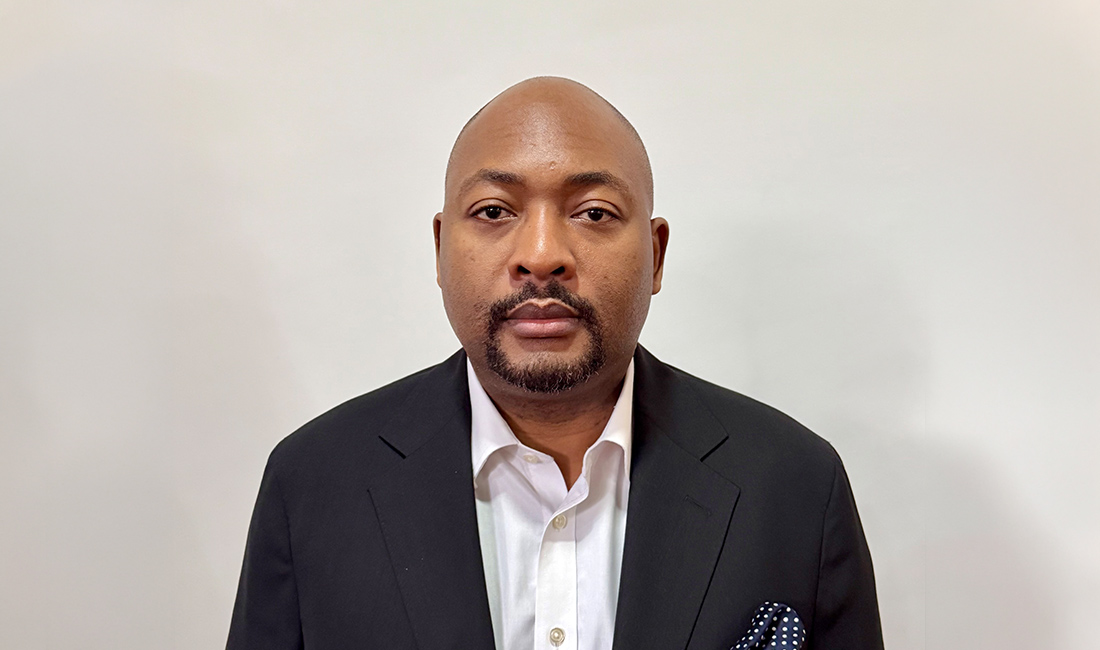
06 Oct Interview with S. E. Hervé Ndoba, Minister of Finance, Central African Republic
The Central African Republic is entering a decisive phase in its development, with GDP growth projected at 2.7% in 2025 and the potential to nearly double by 2027. How would you assess the CAR’s economy and its potential today?
The Central African Republic is currently entering a particularly encouraging phase of economic renewal. Despite the difficult years marked by the COVID-19 pandemic, we have managed to maintain growth of around 1% in 2020 and 2021, thus avoiding recession. Since then, the trajectory has improved significantly. According to the latest projections from the International Monetary Fund (IMF), published in October 2025, growth is expected to reach 3% by the end of the year and could rise to 3.5% in 2026. These figures reflect strong economic momentum and confirm that the reforms undertaken are beginning to bear fruit.
Looking at the details, the primary, secondary and tertiary sectors showed improved results in 2025 compared to 2024. To cite just one example, the primary sector, more specifically the agricultural branch, recorded growth of around 2% over the period. This reflects a real recovery in activity and a gradual improvement in production capacity. It is important to remember that the Central African Republic has more than 37 million acres of arable land, some of the most fertile in the region. In addition, there are significant water resources, both surface water and groundwater, offering considerable potential for agricultural development and the growth of agro-industrial initiatives.
The country remains an exporter of several raw materials. While timber — log wood in particular — remains a flagship product of our exports, I would like to draw attention to another strategic segment: gold production. In 2024, the CAR produced and exported around one ton of gold. In 2025, we reached six tons. This spectacular growth is directly linked to the reforms undertaken in the mining sector and the implementation of the new mining code, which aims to structure the industry, improve traceability, attract investment and maximize national benefits. The objective is clear: to position the CAR as a key supplier of strategic mineral resources, while creating added value for the national economy. This is a development that we warmly welcome, with all the positive benefits it brings for public finances.
Turning now to the secondary sector, we can also express real satisfaction. Overall, this sector has seen significant growth, particularly in processing activities. In the energy sector, we have seen an increase of around 10% in national energy production. In a country like ours, where production capacity has already more than doubled during the two terms of office of the President of the Republic, this trend is very significant. Admittedly, the energy sector remains a strategic area in which we must continue to intensify our efforts to fully unlock the country’s economic potential. But the statistics are encouraging. They show that an increasing amount of energy will be available to support our various productive sectors. This is a major factor. In addition, hydroelectric production is also on the rise. All these developments are helping to boost the secondary sector, particularly manufacturing industries. Whether in agri-food, related activities, or metallurgy, all sectors recorded an increase in production between 2024 and 2025.
Not to mention the construction and public works sector, which recorded a remarkable 12.1% increase in turnover between 2024 and 2025. This growth was largely supported by major projects undertaken in the country. Among them is the strategic Corridor 13 project, designed to provide the CAR with a second access to the sea via the Republic of Congo — a project currently underway with major economic implications. Other structural projects are also underway in the construction sector, driven by the president’s political vision of accelerating the country’s external and internal development. Within the country itself, several regions remain isolated for obvious transportation reasons. The government is working to remedy this through a series of major infrastructure projects. Finally, the tertiary sector is also growing. General trade — an essential pillar of economic activity — grew by 13.8%, confirming the positive momentum across the entire national economy.
Recent months have seen global volatility in energy prices. Have these impacted the CAR’s economy?
There has been a strong performance in the petroleum products sector. Energy remains an essential pillar of economic stability in the CAR: a large proportion of businesses depend directly on fuel to operate. In this regard, 2025 was marked by real stability in the supply of petroleum products, which is a particularly positive development. This performance comes at a time when a major reform of the hydrocarbons sector is underway, carried out with the support and expertise of the IMF.
The progress made in this context reinforces the positive momentum observed throughout the sector. The transport sector also confirms this upward trend. Whether in river transport or road transport, the indicators are positive: road transport recorded a notable increase of 22.7%, evidence of a significant upturn in activity. Even air transport is growing, whether in terms of the number of aircraft movements (+8.3%), passenger traffic (+7.5%) or air freight, which has seen a marked increase of 14.7%. All these factors point to an economy on the move, driven by key sectors that are regaining strength and stability.
These results reflect clear progress, with direct repercussions on hospitality infrastructure. Hotels, for example, have seen a significant increase in occupancy rates. Telecommunications services are following the same trend, as are all other services, which are showing 16% growth compared to fiscal year 2024. These indicators — based on data from the end of August 2025 — already show a significant improvement over the previous year, confirming that the Central African economy is on the right track.
It would be difficult to discuss the economy without mentioning inflation, however. In this regard, according to the Central African Institute of Statistics, Economic and Social Studies (ICASEES), inflationary pressures for fiscal year 2025 averaged 2.1%, compared to 1.2% the previous year. We are continuing our efforts to keep inflation under control, even though certain disruptions on the Douala-Bangui axis — which remains the country’s main supply and export corridor — have had a temporary impact on logistics costs and delays.
Unfortunately, in the wake of the presidential elections in Cameroon, we have experienced some disruptions at the border. These have exerted slight additional pressure on inflation. We are updating our statistics to refine this reading. Overall, however, efforts are continuing to consolidate the momentum that has been built up. The priorities are clear: strengthen logistics and transport chains to reduce costs and improve energy costs through reforms carried out in partnership with the IMF. I am convinced that, once these reforms are fully implemented, we will be able to further accelerate the pace of growth already observed. The Central African Republic has immense potential to turn its challenges into opportunities, particularly in the sectors I have mentioned. This potential, which is already progressing significantly compared to previous years, can be developed in an even more ambitious way.
The 2024-2028 National Development Plan (PND) is one of the most comprehensive and forward-looking frameworks in the country’s recent history. What is the vision behind the NDP and how does it shape the CAR’s development model?
The National Development Plan (PND) 2024-2028 provides a genuine framework for dialogue and consultation between the state, technical and financial partners and the entire international community. It is a strategic tool that reflects our ambition to build a strong, inclusive and sustainable economy. The PND’s vision is based on three major pillars: economic diversification, poverty reduction and job creation, while consolidating our institutions through a participatory and transparent approach that mobilizes all stakeholders. I would also like to point out — and the Minister of Economy and Planning has certainly emphasized this — that the process of developing the NDP has been exceptionally inclusive. All segments of the population have been involved: the regions, different socio-professional categories, the private sector and civil society. Parliament was fully involved and carried out the official validation of the document. This inclusive nature reflects a collective desire to bring about profound change: to turn the page on a humanitarian-centered approach and resolutely embark on a path of development.
This is precisely where the major change introduced by this new strategic framework lies. The PND must now shape a genuine development model, focused on the productive sectors that make up two-thirds of the economy. These key sectors are clearly identified: energy, road infrastructure, agriculture and mining. Other areas provide support, but it is these four pillars that will drive most of the desired economic transformation. This vision has been very well received by international donors and investors. At the round table held on September 14 and 15 in Casablanca, Morocco, the results far exceeded expectations. While the initial target was to raise $8 billion, funding commitments reached more than $9 billion. A total of 18 memoranda of understanding were signed, bringing together more than 500 participants. The commitments obtained cover strategic sectors: agriculture, energy, infrastructure, digital technology and the green economy — all areas that precisely reflect our priority areas.
These figures clearly illustrate the international community’s confidence in the Central African Republic and confirm the viability of the 2024-2028 PND, estimated at $12.8 billion. This plan aims to transform our natural assets into shared prosperity and to meet the legitimate aspirations of our people. But it is important to emphasize that the PND is not limited to a set of projects. It is also based on a broad program of essential reforms designed to provide the CAR with solid institutional foundations. The goal is to ensure continuous improvement in the business climate in a sustainable manner through reforms in areas such as justice, trade, industry, public finances and the economy as a whole, with a particular focus on budget transparency. These reforms are a major component of the PND: they should enable us to shape our country’s development on a sustainable basis. By 2028, we aim to achieve a satisfactory level of progress in all of these transformations, in order to have more robust institutions capable of sustainably supporting the growth and stability of the CAR.
Domestic resource mobilization has become one of the ministry’s core missions and digital transformation is now a major focus of your reform program. What are the main tax reforms implemented by the ministry to increase revenue and how would you describe the progress made in digitization so far?
When we look at the evolution of domestic revenues since President Touadéra came to power, we see continuous and remarkable growth. We have gone from around $178.6 million to over $37 million today. This is quite simply a doubling of revenues, which demonstrates the relevance of the reforms undertaken and the momentum of modernization in our tax administration. These are encouraging results, even though we are fully aware that there is still much to be done. Indeed, the tax burden in the Central African Republic remains one of the lowest in our community, at around 7-8% of GDP, while the average in the Economic and Monetary Community of Central Africa is between 16 and 17%. The gap is considerable and shows the scale of the potential to be mobilized. This clearly means that we must — and can — do better. Ultimately, we must be able to increase our domestic revenue from $357 million to $714 million.
To achieve this goal, the Ministry of Finance has embarked on a genuine digital transformation. Digitalization is at the heart of our reforms. We have launched several structural projects aimed at thoroughly modernizing the tax administration. As part of this, we have deployed the eTax platform, the first version of a digital system enabling online tax filing and payment. On the customs side, we have integrated Sidonia World, an application dedicated to the complete dematerialization of customs procedures, including the payment of duties and taxes upon entry into the country. In terms of budget management, we have implemented the SIMBA application, which now makes it possible to digitize the entire public expenditure chain. The final stage, involving disbursements at the level of the Treasury, has yet to be completed, but this project is underway. We are now entering a decisive phase: the interconnection of all these systems.
The aim is to enable these applications to communicate with each other in order to cross-reference data and broaden the tax base. This will enable us, for example, to identify operators who appear in customs declarations but then disappear from the tax radar. This interconnection is key to enhancing transparency, combating fraud, and mobilizing more domestic revenue. This is a major reform, now fully underway. All of these initiatives will enable us to increase transparency, significantly reduce tax fraud and broaden our tax base — an absolutely essential lever. These advances will naturally contribute to a sustainable increase in domestic revenue. Ultimately, our ambition is clear: to ensure that national revenues not only cover all our primary expenditures, i.e., our sovereign expenditures, but also enable us to finance our own investments. This would give the Central African Republic the necessary leeway to channel resources provided by technical and financial partners and other donors towards strategic investments capable of strongly stimulating the country’s growth.
Finally, the eTax platform has already registered more than 5,000 tax returns to date, which shows that the reform is well and truly underway. I would also like to emphasize that our digitalization ambitions are supported by key partners: the European Union, the IMF, the World Bank, the African Development Bank and the United Nations Development Program. Their support is essential to accompany and reinforce the transformations we have undertaken.
Micro, small and medium-sized enterprises represent more than 90% of the formal sector and are essential to the CAR’s economy. What strategies is the Ministry implementing to strengthen SMEs and increase their contribution to the national economy?
SMEs represent an essential part of our economic fabric. The Ministry of Finance and Budget has adopted an ambitious multisectoral strategy to strengthen this sector, which is indispensable to the country’s growth. In collaboration with the Ministry of Trade and Industry, we have simplified and digitized all administrative procedures by setting up a one-stop digital shop for registration, licensing and tax payment. This reform has significantly reduced delays and costs for entrepreneurs.
At the same time, we have launched training programs, as we believe it is essential for SMEs to receive support and training in entrepreneurial skills. The aim is to enable them to manage their businesses more effectively, but also to give them the tools they need to meet the requirements of banks and microfinance institutions in order to improve their access to finance. Without financing, they cannot sustain their growth. A central element of this strategy is also the implementation of the iCompete project, financed by the World Bank. This program aims to improve the business environment, modernize financial services and facilitate access to credit for SMEs.
As part of the I-Compete project, we have set up a National Guarantee Fund. This fund, financed at launch by the World Bank — and to which the government will also contribute its own resources — is actively being promoted to our other technical and financial partners so that they too can contribute. The objective is clear: to make it easier for SMEs to access credit by reducing the risk borne by financial institutions. This is a silent guarantee, but one that will play a decisive role in facilitating the financing of these enterprises. Thanks to this set of measures, we are convinced that the contribution of SMEs to the national economy — they already represent more than 90% of the formal sector — will be greatly strengthened. Their driving role in job creation should not be underestimated: they are the ones who hire, innovate and structure our economic fabric. It is also for this reason that, as part of I-Compete, we have launched a vast training program for around 7,000 young people in order to better meet the needs of the labor market and support entrepreneurial dynamism. We are also paying particular attention to women entrepreneurs, whose commitment and potential are an essential lever for the country’s inclusive development. In our country, as in many sub-Saharan African states, the economic empowerment of women is a real lever for stability and prosperity. When women are financially empowered, they invest in their children’s education, stabilize their households and contribute directly to social development. That is why a strong gender focus runs through all of our reforms and support mechanisms for SMEs.
Finally, I would like to mention the public-private dialogue, an initiative led by the government and spearheaded by the prime minister himself. This tool plays a central role: it enables ongoing dialogue with the entire private sector, particularly SMEs. While we are implementing numerous support programs, it is essential to remain constantly attentive to their concerns. The feedback we receive enables us to adjust, align and improve our measures so that they truly meet their needs and effectively support their growth.
Regional integration, particularly through the AfCFTA and the African Caucus in Bangui, offers the CAR significant trade and investment opportunities. How is the Ministry using these platforms to expand markets and accelerate growth?
The Central African Republic is fully committed to the African Continental Free Trade Area (AfCFTA). It is also important to remember that our country is not only the heart of Africa: it is also its great crossroads. When we talk about regional integration or the implementation of the AfCFTA, we are necessarily talking about intracontinental transport networks, but also about a digital network covering the entire continent, particularly through fiber optics. And if we look at the map of Africa, the axes connecting East to West and North to South intersect precisely in the CAR. This unique, almost natural geographical position gives us a strategic role that we fully embrace. It is in this spirit that we are taking advantage of several international platforms to highlight this centrality and show what the CAR can contribute to African integration.
The African Caucus is indeed a major event, organized under the leadership of the President of the Republic. For the first time in our history, we welcomed the entire continent: finance ministers, economy ministers and central bank governors. They all gathered in Bangui to discuss economic and financial issues, including those related to the AfCFTA, which concern us directly and collectively. This also allowed us to promote the image of the Central African Republic on the continental stage. All these efforts have a clear objective: to boost trade, attract strategic investors and position the CAR as a key player in African integration. To achieve this, we are harmonizing our public policies so that they are fully aligned with community and continental standards. These regional and international platforms open real opportunities to develop our industrial fabric, strengthen our competitiveness and, above all, transform our raw materials locally.
When I presented our country’s economic situation, I pointed out that we have immense agricultural potential: 37 million acres of arable land, less than 5% of which is currently being farmed. With such potential, the CAR can become Africa’s breadbasket, producing both food crops and agricultural raw materials for processing. The challenge is to capture more value chains and structure agro-industrial sectors capable of supplying the continental market within the framework of the AfCFTA. This is truly our vision: a CAR that produces, processes, exports and becomes a strategic transit point for intra-African flows, a transit point to reduce distances and facilitate trade between the east, west, north and south of the continent.
Several trade agreements have already been concluded, leading to a significant increase in our regional exports in recent years. These advances open new opportunities for our companies, which can now integrate more effectively into the African market, particularly in the agro-industry, crafts and energy sectors. They will thus have the necessary leverage to realize their full potential. This, in essence, is how the CAR intends to position itself as a major player within the AfCFTA.
Last fall, the CAR secured billions for the PND and became the 46th member of the Africa Finance Corporation. What makes the CAR particularly attractive to foreign capital today and what reforms are in place to facilitate the arrival of investors and strengthen their confidence?
What we can say is that the CAR remains a land of opportunity for investment. The country has abundant natural resources, a rapidly expanding market and significantly improved political and security stability. This is essential, because everyone knows that no investor will commit without a minimum level of confidence in the security environment. To attract more capital, we have launched the one-stop shop, already mentioned, to simplify all administrative procedures and offer attractive tax incentives. The investment charter allows new investors to benefit from advantageous schemes designed to accelerate their projects. In addition, the Central Bank guarantees the repatriation of dividends and profits, which is often a decisive factor in investment decisions. It should also be remembered that the CAR represents a new frontier in terms of economic profitability. Today, there are few countries where investments can still generate double-digit rates of return. This is a reality in the Central African Republic and it is a major argument for investors seeking solid prospects.
We now have a structural framework, the PND 2024-2028, which gives a decisive role to the private sector. This is an essential point: this plan cannot be financed entirely by the state or by donors. A significant portion must be borne by private actors, through public-private partnerships, build-operate-transfer models and other mechanisms capable of accelerating the attraction of foreign direct investment and capital. Moreover, the first signs are encouraging: some investors have already taken the plunge. We have signed an initial contract worth approximately $1.5 million under the PND, demonstrating our determination to move forward in this direction and the gradual improvement in the business climate. The public-private dialogue that we are engaged in on an ongoing basis is an essential lever for strengthening this momentum.
I must also mention the major reforms undertaken in strategic sectors: energy, mining, agriculture and land reform, which are absolutely crucial to securing investments. All of these advances are aimed at building a solid legislative and regulatory framework, a foundation of trust on which investors can rely to return to the Central African Republic on a lasting basis.
The CAR is strengthening its ties with the United States as part of broader US commitments of more than $2.5 billion for Africa and is attracting growing interest from US investors. How is the ministry positioning the CAR as an attractive destination for US investors and what opportunities do you see for developing this partnership in the coming years?
The United States under the presidency of Donald Trump, with a resolutely pragmatic and transactional business diplomacy,remains a major strategic partner for the CAR Our country, which is continuing its political stabilization and recording solid growth, estimated at 3% in 2025 and 3.7% in 2026, represents an attractive environment for structuring partnerships. We are convinced that the CAR is a particularly promising destination for American companies and investors. The country offers lucrative prospects in sectors such as agribusiness, renewable energy, infrastructure and especially critical minerals. The latter segment is perfectly aligned with President Trump’s America First vision, which encourages foreign direct investment capable of generating robust profitability and mutual prosperity, as exemplified by the recently relaunched Prosper Africa program.
Regarding critical minerals, we are closely following the matrix published by the US government, which clearly identifies the strategic substances that are essential for industrial, technological and energy development. The CAR has several of these resources, which opens a particularly important area for cooperation. All of these critical minerals are present in the CAR. It is also worth noting that in his March 2024 speech on the anniversary of his inauguration, the President of the Republic announced that we had gone from 470 mining indices to more than 500 today. This means that rare earths and all strategic minerals have indeed been identified on our territory. This is a major asset, not only for our development, but also for the country’s attractiveness to American capital.
We are determined to strengthen cooperation with US companies, particularly through training, technology transfers and the creation of a business environment conducive to investment. Through this interview, I would like to send a clear message: we invite American investors to join us in transforming the CAR into a profitable African hub, serving our common commercial ambitions and a win-win partnership.
Since your appointment in 2021, you have played a central role in one of the most significant periods of economic transformation in the country’s history. What personal achievements make you most proud in this exceptional journey and what is your vision for the CAR’s economy and its role in the region and on the continent between now and 2028 and beyond?
What makes me most proud is, above all, the macroeconomic and fiscal stability that we have been able to restore. Thanks to the support of the President of the Republic, the prime minister and the entire government, we have succeeded in re-establishing a program backed by the IMF’s Extended Credit Facility: an initial program of $191 million, which was then increased to more than $200 million over three years. This program has enabled us to undertake major, ambitious and sometimes difficult structural reforms. When I look at the interim results today, I can only be deeply proud. We have also made progress toward fiscal sustainability, translating the president’s vision into reality: recruiting more civil servants, a process that is now well underway and will be completed by the end of the year. The objective is clear: to deploy more teachers, more doctors and more healthcare professionals throughout the country. Now that security has been restored throughout the country, it is essential to bring basic social services closer to the people.
I am extremely proud to have contributed to this dynamic and we are continuing these efforts with determination. I am particularly proud of the digitalization process, which is truly the backbone of the reforms undertaken within the ministry. This modernization allows for greater transparency, increased efficiency and a significant reduction in fraud. These are essential advances, as is the strengthening of control institutions. We have worked to consolidate key structures such as the General Inspectorate of Finance and the Court of Auditors. These institutions now have the necessary resources and framework to fully carry out their missions. Our efforts continue: reforms continue to evolve, refine and produce results. In short, these are some of the things that make me deeply proud of how far we have come and all that we have achieved together.
In this business climate, there is one indicator that I would like to highlight: that of the Millennium Challenge Corporation, which is publicly available on their website. Among other things, this indicator measures freedom of expression and several dimensions of governance. We can see that, for the CAR, these data are now open and positive. This is an extremely important signal, which attests to the country’s institutional progress. We have undertaken major reforms in the business climate. We remain open to dialogue with all investors, we analyze their feedback and we incorporate their recommendations in order to continuously improve the national economic environment. The tools already exist to make the CAR a true model in terms of business climate and we are working every day to achieve this.
I would also like to mention investment opportunities. As I said, there are few countries or sectors today that still offer double-digit returns. However, this is the case in the Central African Republic. The opportunities are real, tangible and perfectly aligned with U.S. strategic priorities. So what more could you ask for? The conditions are right: now is the time to seize these opportunities. That is why I would like to say to all USA Today readers: “The Central African Republic is open for business and we are waiting for you.”
Sorry, the comment form is closed at this time.